
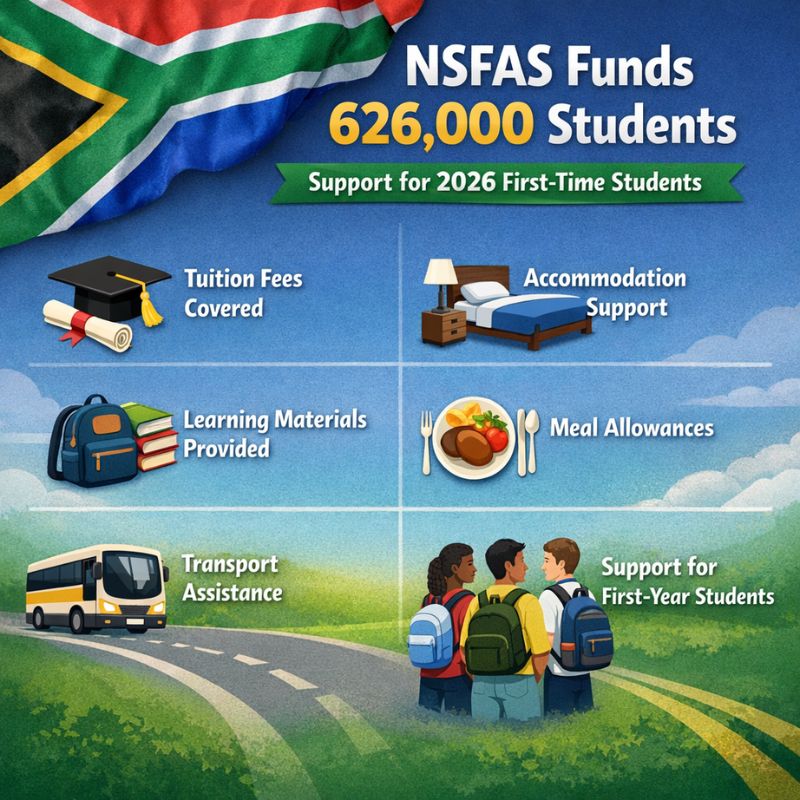
The National Student Financial Aid Scheme (NSFAS) has approved funding for 626,935 first-time applicants. 427,144 continuing university students have also met the requirements for support.
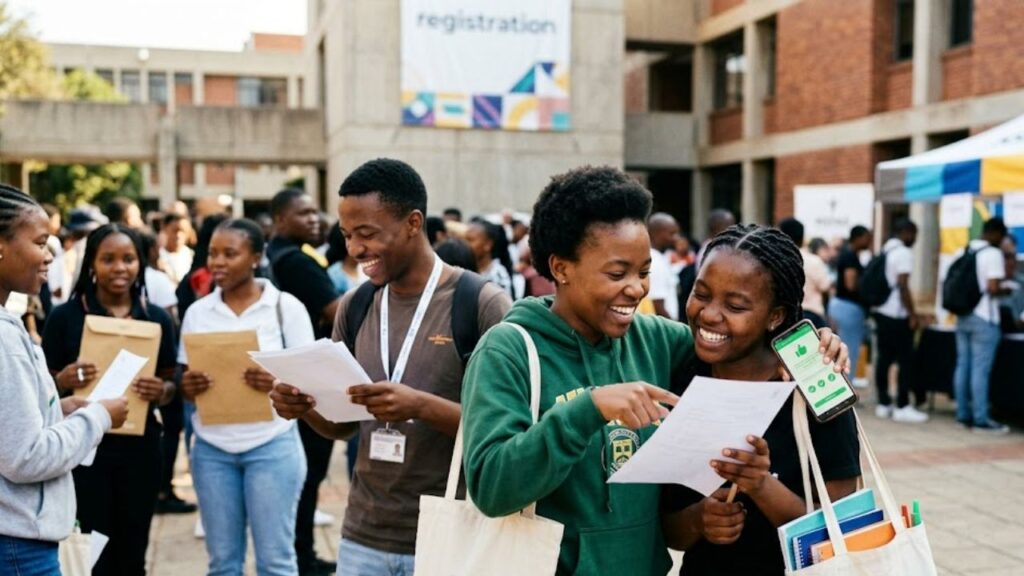
Higher Education and Training Minister Buti Manamela spoke to the media on Thursday about the state of the Post-School Education and Training (PSET) sector and how ready it is for the 2026 academic year. He said that NSFAS is still very important for helping poor and working-class students get into college.
But he also said that ongoing improvements in basic education, along with broader economic problems, are still putting pressure on the funding model.
 12 True Stories That Prove Kindness, Compassion and Love Can Light Up Even the Darkest Moments
“Short-term measures to stabilize the situation are in place, and a medium-term reform of funding that will last is being worked on. “The missing-middle fund is still growing,” Manamela said.

The Minister also said that Sector Education and Training Authorities (SETAs) play a very important role in making it easier for students who don’t qualify for NSFAS to get more money.
He said that SETAs are helping more than 15,000 new bursary recipients and almost 8,000 continuing beneficiaries during the 2026/27funding cycle. The total amount is close to R2 billion.
He said, “This diversification of funding sources reduces over-reliance on NSFAS and strengthens system resilience.”
A bachelor’s degree does not guarantee admission to college.
Manamela used the briefing to talk about what he called a long-standing misunderstanding about how students who pass the National Senior Certificate (NSC) exam with a Bachelor’s degree can get into college.
He said that 46.4% of candidates passed the Bachelor’s level in the 2026 NSC exams, but this often makes students and their families expect too much.
“A Bachelor’s degree does not guarantee admission to a university or a specific program.” Universities have rules for faculty and programs, such as subject combinations, minimum symbols, and selection processes when there are more applicants than spots available.
“Often, learners and families are disappointed not because they failed, but because their expectations were not met.” “The Minister said, “It is our job to make sure that students understand all of the credible paths they can take after school, not just the most obvious ones.”
In the 2026 NSC exams, 28.1% of candidates passed the Diploma and 13.5% passed the Higher Certificate.

Manamela said that more than 40% of students who take the Bachelor’s exam do not pass, so the post-school system needs to be clearly different, well-explained, and well-communicated.
The Minister said that while he was happy with the big rise in matric pass rates, the result has put a lot of stress on the PSET system.
There are about 535,000 funded and planned spaces in the Post-School Education and Training System (PSET) right now. These spaces are in universities, Technical Vocational Education and Training (TVET) colleges, Community Education and Training (CET) colleges, skills programs, and learning at work. “This gap between success and capacity is real, structural, and has been around for a long time,” Manamela said.
Manamela said that the post-school system is not in crisis and is instead going through planned changes.
“It is under pressure, but it is being changed on purpose. All types of education, training, and skill-building are equally valuable and important to society. Having more than one way to get there is not a compromise; it is a strength.
“Not every student will get into their first choice right away, but every student should be able to find a credible, supported way to learn, develop skills, and be a productive member of society.” The Minister said, “That is the task we have set for ourselves, and that is the work we will continue to do.”
Second chance and community learning
Manamela said that Community Education and Training colleges are still very important for making sure everyone can get an education and that they are ready for the 2026 school year.
He said that the colleges will take in both young people and adults who want to get the Amended Senior Certificate, take part in the National Senior Certificate Second Chance Programme, or learn new skills and get a job.
Manamela said, “The school year started on April 12, 2026, and registrations for annual programs closed on April 27, 2026. However, short skills programs are open all year